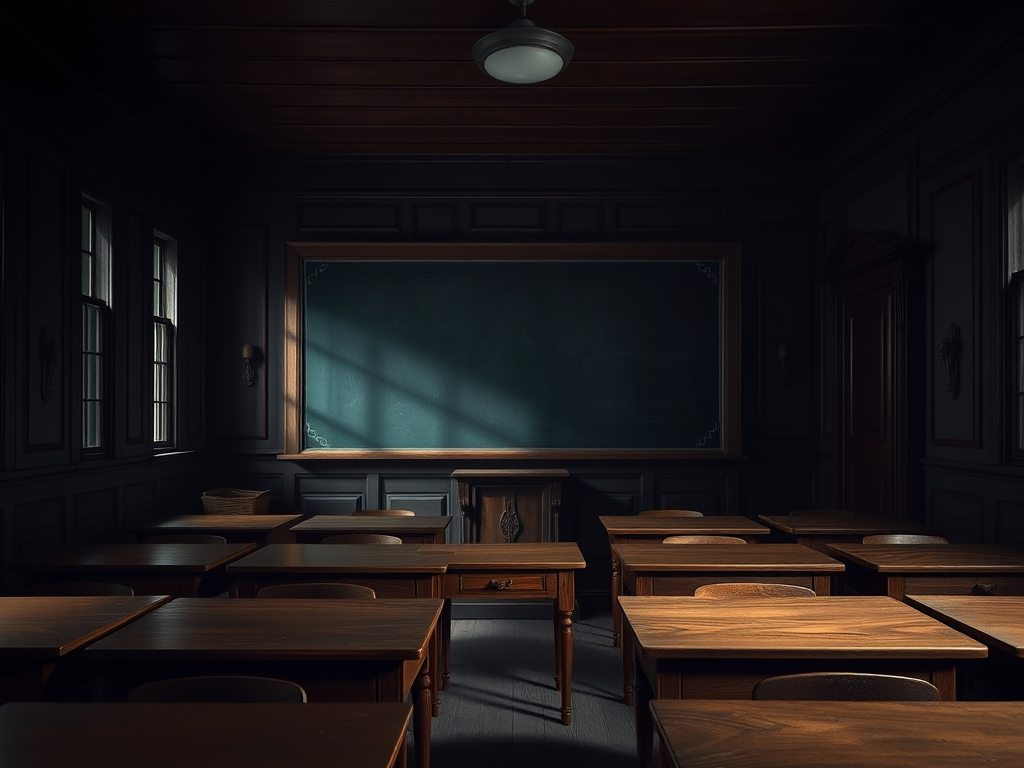
Diedrich Knickerbocker: “affronted at being taken for a school-master”

AI-generated image created in WordPress

Wednesday, September 24, 2025

BY TRACY HOFFMAN

I’m writing this blog, or starting this blog—in my garage, right before pulling away for the two-hour commute to Baylor. I’ll pick up the writing again at red lights, and then finish up at some point this evening after my classes finish at 5:15.

Yesterday, I had high hopes of getting ahead of this Washington Irving Wednesday. But alas! It was 90 degrees in my office, up five degrees from the usual setting. After chatting with a student around 5 p.m., I put a “gone fishing” sign on the door, packed my bags, and headed home—to work. But alas! Yet again, it wasn’t meant to be.
After cruising the I-35 corridor for about 45 minutes, the freeway was shut down by some reason I never discovered, perhaps an accident or a construction-related matter. Anyhow, I graded two batches of quizzes while stopped, and I also learned through texts and phone calls my sister was in the hospital. After the 30-minute delay of sitting on the freeway, and after visiting my sister at the hospital, who will hopefully be home soon, it was 9:15 by the time I finally got home. I needed a shower after sweating through my clothes at the office and after collecting a variety of germs at the hospital. I needed dinner. I needed to work on my blog. But sadly, no work was done.

Fortunately, though, storms woke me around 4 a.m., so I went ahead and got up for coffee and Washington Irving. I decided to read the texts I had assigned from The Sketch Book: “The Wife,” “A Broken Heart,” “Account of the Author,” and “To the Public.” It’s Sentimental Irving Day in my Washington Irving class, and I was ready to chat about our occasionally sentimental “man of letters.”

On Monday, our class tackled satire and persona as I guided them through pedagogy genre. After sharing definitions for satire and persona, we created Billy Bob “Bubba” Cowboy Jones to tell our satirical History of Texas. Personally, I think Cowboys owner Jerry Jones should be honored that Gen Z students think him comparable to Diedrich Knickerbocker. Perhaps one day we’ll have a Texas team called the Jerrys or the Joneses, like New Yorkers have Knickerbockers.

In our conversations about Diedrich Knickerbocker, the passages comparing him to a teacher jumped out to me. For instance, Seth Handaside in the “Account of the Author“ first describes Knickerbocker as: “a small brisk looking old gentleman, dressed in a rusty black coat, a pair of olive velvet breeches, and a small cocked hat. He had a few grey hairs plaited and clubbed behind, and his beard seemed to be of some four and twenty hairs growth. The only piece of finery which he bore about him, was a bright pair of square silver shoe buckles, and all his baggage was contained in a pair of saddle bags which he carried under his arm. His whole appearance was something out of the common run, and my wife, who is a very shrewd body, at once set him down for some eminent country school-master” (373).

The first description we ever see of Diedrich Knickerbocker suggests a teacher. We learn five paragraphs later, in an effort to help Knickerbocker pay his bills, Mrs. Handaside suggests he “teach the children their letters” while she offers “to try her best and get the neighbours to send their children also” (375). However, Knickerbocker “took it in such dudgeon, and seemed so affronted at being taken for a school-master, that she never dared speak on the subject again” (375).*

In class, we spent a little time comparing Diedrich Knickerbocker to Ichabod Crane, and as I’m digging into genre pedagogy and new ways of considering Ichabod, this comparison seems worth pursuing. We watched film clips of both Ichabod and Diedrich, and Irving clearly overlaps physical qualities and character descriptions.

Today, we built upon our conversation from Monday about persona and satire, by adding a sentimental spin to our recent development, Billy Bob “Bubba” Cowboy Jones. We decided his lady should be a New Yorker, so we went with Eugenia, since that’s the name of Jerry Jones’ wife. Bubba falls for Eugenia Knickerbocker, an outsider visiting Texas. She is bitten by a rattlesnake and smitten by Bubba, when he rescues her from the rattler’s venom.

My students also spun yarns about their own research projects, and I look forward to sharing their ARGs (alternative reality games) with you, later this semester.

As this semester progresses, please know we have much going on behind the scenes, beyond my daily angst with commutes and temperature. Cheryl Weaver, who teaches in New York, is working with me on Washington Irving Wednesdays as an unofficial secretary to the Washington Irving Society. Of course, we’ll make it official when we vote for officers at our next 2026 business meeting in Chicago. Cheryl and I met in Boston at the 2025 ALA conference.

Along with Vice-President Sean Keck, Cheryl and I will be putting together our 2026 call for papers. You can probably guess we plan to have two panels on teaching Washington Irving, tentatively titled Pedagogy and Washington Irving Panel One and Pedagogy and Washington Irving Panel Two.

Please watch for the CFPs and also some blogs from Cheryl.

This is Tracy Hoffman, president of the Washington Irving society, signing off until next Wednesday.

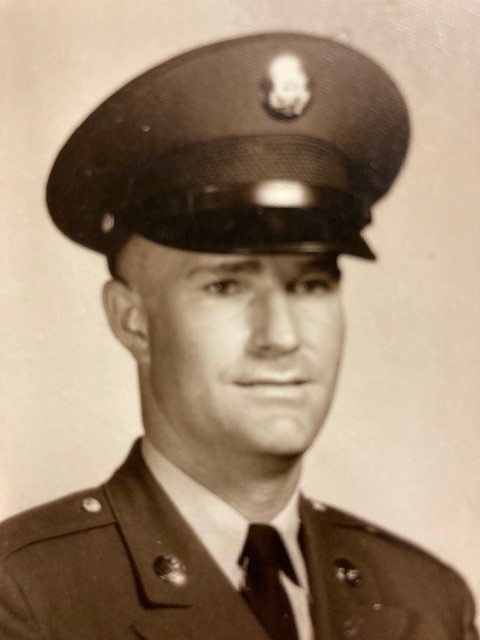
Mug Shot

*Irving, Washington. History, Tales and Sketches. Library of America. 1983.

Sampling Salmagundi: Introducing Students to Washington Irving’s Early Periodical Work

Meal prep for salmagundi. Photo by Tracy Hoffman

Wednesday, September 17, 2025

BY TRACY HOFFMAN

When I teach Salmagundi, I always think about bringing a salmagundi salad to class, but then I decide anchovies probably aren’t the best idea. I wouldn’t want anyone to connect our Washington Irving class to a fishy smell.

According to the Oxford English Dictionary, salmagundi consists of “chopped meat, anchovies, eggs, onions with oil and condiments.”* But when I’ve made my version of salmagundi, I tend to avoid any extra “chopped meat.” The anchovies are enough, but you can make it however you like. The idea is a mixed salad, and we all know how to throw together a salad we like.

My class has cruised through the most popular stories: “Rip Van Winkle,” “The Legend of Sleepy Hollow,” “The Devil and Tom Walker,” and the Bracebridge Christmas stories. I wanted to give students a fun, easy way to start the class, and to get everyone on the same page since a handful had already read Irving in previous classes.

With the basics down, this week we began the chronological sampling of Irving’s larger body of work, starting with the Mustapha letters from Salmagundi. The plan is to finish the semester with snippets from the five George Washington volumes. I only assigned students three of the Mustapha letters, but many also ventured into other articles, so I trust everybody got an overall feel for the twenty issues of Salmagundi.

With all that’s going on this Wednesday of 2025, I find myself trying to imagine Washington Irving’s world of 1807, more than a decade before he published “The Legend of Sleepy Hollow.” Instead of continuing to deal with Ichabod Crane’s role as the chief pedagogue, my mind has drifted into the troubling times of Irving’s life while doing earlier periodical work.

According to the Library of America’s chronology, Irving spends 1807-1808 doing the following:

  • “Co-authors Salmagundi, which receives much praise, with William Irving and James Kirke Paulding.
  • Is a sympathetic spectator at the trial of Aaron Burr in Richmond.
  • Makes periodic visits to Philadelphia.
  • Father dies October 1807; sister Ann Dodge dies May 1808.
  • Continues to visit the Hoffman household and falls in love with Matilda Hoffman.
  • With Peter Irving, conceives the idea of a burlesque historical guidebook to New York. Begins work on it June 1808” (1095).**

It’s almost unimaginable to think of losing father and sister in less than a year, all the while falling in love with Matilda Hoffman, who herself passes away, a little later, in the spring of 1809. The country deals with Aaron’s Burr’s charge of treason, and through all of life’s difficulties, Irving co-writes, anonymously, articles for Salmagundi with his brother William and James Kirke Paulding. He also begins work on more satire, as he plans A History of New York.

Today, in class, I wanted to talk about the pedagogy of genre with regard to satire, and to do some writing activities involving different kinds of satire, but I decided to hold that thought until next week when we read portions of A History of New York. Right now, asking students to critique our society in a satirical way feels forced, but I thought mocking the early days of the Republic of Texas next week, alongside Irving’s mocking of New York, would open up a useful application of the genre. I’ll report back next week to let you know how Texas measures up to New York. Until then.

*“Salmagundi, N., Sense 2.” Oxford English Dictionary, Oxford UP, September 2024, https://doi.org/10.1093/OED/4177634030.

**Irving, Washington. History, Tales and Sketches. Library of America. 1983.

Ichabod Crane Still Haunts My Brain: Pedagogical Thoughts about Sleepy Hollow’s Connecticut Yankee

AI Generated in WordPress

Wednesday, September 10, 2025

BY TRACY HOFFMAN

Over the weekend and into this week, I’ve continued thinking about Ichabod Crane as a teacher and ghost.

These ruminations have blended with concerns about A Christmas Carol by Charles Dickens since the beautiful building, which comprises my 85-degree office, will soon be turned into a haunted-house-of-sorts for Scrooge’s ghosts. I will most certainly get around to writing about the impending mayhem in future blogs. Suffice it to say for today, my Ichabod thoughts have been tainted by a foreboding sense of Charles Dickens.

My mental image of Ichabod Crane coexists with pictures of the Dickens’ character Uriah Heep from David Copperfield. Physically, they look the same in my mind’s eye, even though I realize Ichabod is a much livelier character than Uriah. But let me stop myself from going further into the Dickens rabbit hole. (If you want to jump into Elizabeth Bradley’s article, “Dickens and Irving: A Tale of Two Christmas Tales,” you’ll be ready for my future conversations as we get closer to December.)

The big research questions I pose today are:

  1. Is Ichabod Crane the first Connecticut Yankee Pedagogue Ghost in American Literature?
  2. Is Ichabod Crane the first Connecticut Yankee Ghost in American Literature?
  3. Is Ichabod Crane the first Connecticut Yankee Teacher in American Literature?

I think we know the answers to all these questions. American Literature isn’t necessary. Where else would we see a Connecticut Yankee? Yes, of course, he would be the first in all three categories. The first two questions/descriptions are so bizarre and specific, I can’t imagine another character fulfilling them. But my last question has me thinking.

Yes, I believe Ichabod Crane is our first Connecticut Yankee who teaches. But why, in the development of the Connecticut Yankee, did Irving choose to make him a teacher?  

Ichabod Crane balances between the Jonathan character of Royal Tyler’s The Contrast (1787) and Hank Morgan of Mark Twain’s Connecticut Yankee in King Arthur’s Court (1889). David Gamut of James Fenimore Cooper’s Last of the Mohicans (1826), appearing a short time after Irving’s character, keeps the role as a music teacher, but Hank Morgan has lost the teaching quality by 1889.

According to Gary Denis, in Sleepy Hollow: Birth of the Legend (2015), Irving transfers some of the stereotypical qualities of the Yankee onto Brom Bones and refines Ichabod’s role to make him an “educated city-slicker” instead of “the country dweller” (158). Denis points to Irving’s improvement: “Irving is thereby credited as having been the first to introduce a conflict between East and West, the refined and cultured Connecticut Yankee vs. the rough-hewn frontiersman” (158).

But I’m still left with—Why? Why did Irving choose a teacher for Ichabod’s profession? We know that the minister and Ichabod Crane are the two most educated fellows in Sleepy Hollow, so I understand the options were limited.

We can study Jesse Merwin, Irving’s teacher friend who inspired the character. And we can consider Ichabod B. Crane, the military officer and inspiration for Ichabod’s name. With more research to investigate, I’ll close the blog out for now. My quest to understand Ichabod Crane, the pedagogue, continues.

Today, my students are reading “The Devil and Tom Walker,” and I can see Dickens borrowing heavily from Irving’s story to benefit his own Christmas Carol, so my blog next Wednesday could easily collapse into my own Dickens’ nightmares.

Haunted Schoolhouse: Reflections on Ichabod Crane, “Worthy Pedagogue” of Sleepy Hollow

Photo by Tracy Hoffman

Wednesday, September 3, 2025

BY TRACY HOFFMAN

The obvious choice for launching a conversation about pedagogy and Washington Irving would be “the worthy pedagogue,” Ichabod Crane. In fact, our Sleepy Hollow superstar of pedagogy could probably keep me busy blogging for the rest of 2025.

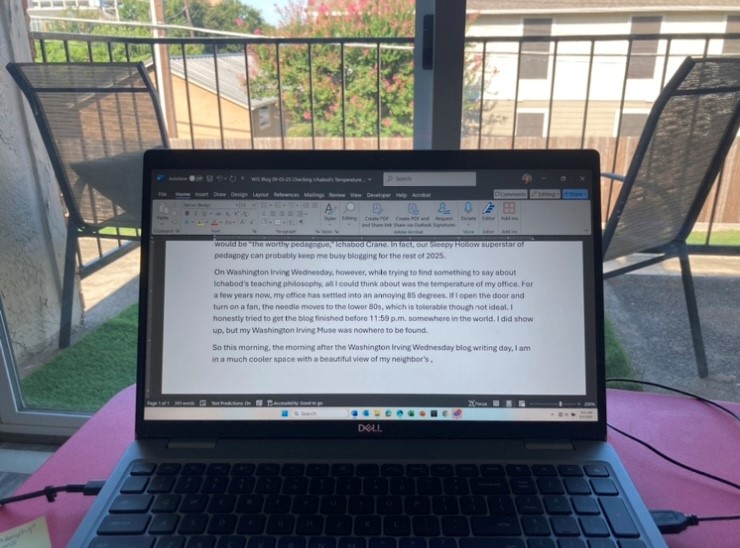
On Washington Irving Wednesday, however, while trying to find something to say about Ichabod’s teaching, all I could think about was the temperature of my office. For a few years now, my office on campus has settled into an annoying 85 degrees. If I open the door, turn on a fan, and keep the lights off, the needle moves to the lower 80s, which is tolerable though not ideal. I honestly tried to get this blog finished before 11:59 p.m. somewhere in the world. I did show up and began writing, but my Washington Irving Muse was too hot and bothered to offer much assistance.

This Thursday morning, the morning after Washington Irving Wednesday, I am in a much cooler space with a pretty view of blue skies and hot pink crepe myrtle bushes. I apologize for posting Thursday, instead of Wednesday, but I didn’t feel comfortable sharing all the pedagogical thoughts going through my head last night about the “thermal comfort” of “educational buildings” negatively impacting mental health. (Can you tell I was digressing into scholarly articles about architecture, psychology, and more?) My thoughts and the temperature were out of control, so I shut everything down at 8:30 p.m. Texas time. I’m in a much better space, mentally and physically, this morning.

A few nights ago, I re-read “The Legend of Sleepy Hollow” since my undergraduate students this week have been reading it, along with “Rip Van Winkle,” and “Philip of Pokanoket.” My intent was to notice everything related to teaching, which allowed me to consider some passages I haven’t thought about in a while, or ever. I’ll do my best to unpack a few ideas today, think about Ichabod Crane over the weekend (which sounds like a very odd thing to do), and pick up my thoughts again next week.

What struck me most a few days ago, and what jumps out to me now, after my evening with “climate control” pedagogy, include:

  • Abandoned, haunted schoolhouse
  • School as empire
  • Burning of Ichabod’s books
  • Educational connection to “Tarry” in Tarrytown
  • Ichabod Crane’s mental health
  • Marrying Katrina to get out of the teaching profession
  • Bachelorhood as a negative detachment from community
  • Moral of the story

After Ichabod’s disappearance, we learn since “he was a bachelor, and in nobody’s debt, nobody troubled his head any more about him, the school was removed to a different quarter of the hollow, and another pedagogue reigned in his stead” (1086*). And, right prior to the Postscript, Irving writes: “The schoolhouse being deserted, soon fell to decay, and was reported to be haunted by the ghost of the unfortunate pedagogue; and the plough boy, loitering homeward of a still summer evening, has often fancied his voice at a distance, chanting a melancholy psalm tune among the tranquil solitudes of Sleepy Hollow” (1087).

Much like the headless horseman who haunts Sleepy Hollow, Irving suggests Ichabod may haunt the area, too. Instead of roaring through town on a late-night ride, though, Ichabod Crane sings his way around the schoolhouse.

Singing? Do we have any other ghosts in American Literature who sing? He’s a Singing Connecticut Yankee Ghost. Any of those on the American stage? I’ll have to investigate the matter. A few of my colleagues may know a thing or two about that.

To be honest, I’ve never thought much about the haunting of the schoolhouse, the “educational building” of the town, to use jargon I picked up on my brief journey through architecture research last night. We typically think of the Old Dutch Church and the Church Bridge as central physical structures in the story, which could open up a conversation about faith, but the abandoned schoolhouse further pushes the idea of Ichabod Crane abandoning his spaces and belongings, and begs for an educational interpretation. Just as the “gazers and gossips…came to the conclusion, that Ichabod had been carried off by the galloping Hessian” (1086), the school, too, is “carried off” to a more agreeable location.

Midway through the story, Brom Bones plots practical jokes against Ichabod, making good use of the schoolhouse: “Ichabod became the object of whimsical persecution to Bones, and his gang of rough riders. They harried his hitherto peaceful domains; smoked out his singing school, by stopping up the chimney; broke into the school house at night, in spite of its formidable fastenings of withe and window stakes, and turned every thing topsy-turvy, so that the poor schoolmaster began to think all the witches in the country held their meetings there” (1071-72).

Not only does Ichabod Crane have to deal with Brom’s antics, but he also battles “evil doers” at the schoolhouse. Irving writes: “On a fine autumnal afternoon, Ichabod, in pensive mood, sat enthroned on the lofty stool from when he usually watched all the concerns of his little literary realm. In his hand he swayed a ferule, that sceptre of despotic power, the birch of justice reposed on three nails, behind the throne, a constant terror to evil doers; while on the desk before him might be seen sundry contraband articles and prohibited weapons, detected upon the persons of idle urchins, such as half munched apples, popguns, whirligigs, fly cages, and whole legions of rampant little paper game cocks” (1072).

The weaponry students use interests me. I’m not sure exactly what I might have to say about all the paraphernalia he gathers from them, but Ichabod accumulates sordid things, as evidenced by his personal collection of strange belongings left behind in a handkerchief when he vanishes.

And on that note, let me stop these ramblings and vanish from this week’s blog post. I’ll be back next week, God willing on Wednesday with clearer thoughts, to continue the conversation about pedagogy and Irving.

* Irving quotes are from the Library of America, published in 1983.

Photo by Tracy Hoffman

Washington Irving Wednesdays Are Back!

Image created in WordPress AI

Wednesday, August 27, 2025

BY TRACY HOFFMAN

In the spring, a friend asked me, “Are you still doing your weekly blogs?” I said no, but had fantastic excuses why I haven’t kept up the ritual: I’ve posted guest and student blogs, we have plenty of content on the website, I’ve been busy with other work, I’ve been dealing with family issues, etc. Of course, the pathetic response I gave to my friend has been eating at me all summer.

At least for this school year, from now until May 2026, I’m committed to giving my Wednesdays back to Washington Irving. It may take me until 11:59 p.m. somewhere on the planet, and like my daily workouts, some blogs may be rushed and brief, but I will show up to publish something on the website.

If we have a student or guest blogger, I can set them up on Wednesday, but post on a day other than Washington Irving Wednesday, so please keep those coming, if you are so inclined.

The teaching of Irving’s texts, especially “Rip Van Winkle” and “The Legend of Sleepy Hollow” will probably be the subject of my next blogs for five main reasons:

  1. I’m currently teaching an undergraduate class on Washington Irving.
  2. People often email to ask for Irving teaching material, especially for “Rip Van Winkle” and “The Legend of Sleepy Hollow.”
  3. It’s my understanding that Irving biographer Andrew Burstein has taught a course solely devoted to Washington Irving. I’d love to connect with others who have done the same. Perhaps we can unite our efforts in helping instructors who need teaching materials.
  4. In October, I’m giving a paper on Washington Irving and Pedagogy for a conference.
  5. I’m giving such a paper, and put together a pedagogy and literature panel, because my university, as of late, wants me to be an international superstar of pedagogy.

In part, I hope my blogging can help me work through ideas about the study of teaching Washington Irving–on a local, national, and international stage—to make a significant enough contribution to pacify my university’s “powers that be.”  

Those who know me well recognize how much I hate having my picture taken and have no interest whatsoever in being recognized internationally as a star of anything. But I will play the game.

I gave up the rigorous study of pedagogy decades ago, after taking a handful of graduate classes in a College of Education. I appreciated, and still appreciate, the foundation I received in the theory of education, but chose a different path—to pursue literary studies, which brought me to Washington Irving.

My university has been kind to me, allowing me the freedom for many years to focus my attention on Washington Irving, but I’m being lassoed a bit with pedagogy restraints.

With these initial thoughts in mind, on this renewed Washington Irving Wednesday, I ask you to please like or dislike, comment in kind or unkind, to any upcoming content creation from me, since my academic career now demands such responses. I thank you in advance, and I have a hunch this shift in academia may benefit the Washington Irving Society more than I realize. I trust the work ahead of me will be a “win-win” situation for me, the university, and Irving scholarship.

Buckle up for Washington Irving

Photo by Lisa Fotios on Pexels.com

Wednesday, October 11, 2023

BY TIFFANI MARTINEZ

Washington Irving is an exceptional author and storyteller. He is able to illustrate fantastical worlds or “sketches” in such a way that readers feel immersed into the fictional worlds he creates. He also is known for his humor and satire, like in Salmagundi and in A History of New York.

Irving so wonderfully details and expands upon ideas in his writings, and he is not limited to one genre, but moves between them, often blurring the lines between fiction and reality, between love and heartbreak, and between comedy and tragedy. There is something for everybody in terms of his complete works, making him one of the most notable authors with an unparalleled, expansive repertoire.

Some of my favorite works by Irving are some of his more brazen pieces of satire, due to his refreshingly blunt view of society. His satire is doused in comedy with a very tongue-in-cheek nature, often poking fun at assumptions by the common people and caricatures of what they believe to be true.

For example, A History of New York is exactly the type of satire we can expect to find in Irving’s writings, due to the outright absurdity of the concept of telling the story of New York starting back at the beginning of time, literally. Typically, when one tries to read about the history of anything, a relevant point in time is chosen in which to begin an exposition for the sake of brevity. Irving takes this concept to a literal point and hilariously starts at the dawn of time, with an intentional disregard for succinctness. This comedic tinge is also present in some of his other stories, like “Rip Van Winkle.”

“Rip Van Winkle” is a great example of “everything in moderation,” as the main character, Rip, is a man who is depicted as drinking far more than he should. He has a wife that is a stereotypical “old-school” woman, as she nags and gets after him for his bad habit. In summation, Rip goes into the woods seeking reprieve, astonishingly accepts a drink from these fairy-type characters, and literally sleeps through the American Revolution.

The humor Irving laces into the story reads on a few levels because for one, a man drinks strange fluid from some unknown party, willingly and without question. Second, it is funny that once he wakes up he notices he has a long, gray beard and moseys on into town, thinking everything will be as it should, although it is quite apparent that a lot of time has passed since he had first fallen asleep.

The absurdity of the tale is what makes the story arguably about temperance, have comedic relief without being too “preachy.” It is masterfully done as the debate on the true meaning of “Rip Van Winkle” is still being written on by scholars to this day.

If you haven’t read anything by Irving, buy yourself a copy of The Sketch Book, grab some snacks, and buckle in for a journey through the mind of a literary genius.

This blog was written for the Washington Irving Society website in Fall 2022 during Dr. Tracy Hoffman’s English 4382 Major Authors class at Baylor University.

Published in: on October 11, 2023 at 5:49 pm  Leave a Comment  

The Man behind “The Devil and Tom Walker”

Photo by Markus Spiske on Pexels.com

Wednesday, October 4, 2023

BY KAITLYN HANSON

The writer, the poet, the biographer, the historian, the diplomat, the essayist, the lawyer, and the ambassador are all titles that have been used to describe Washington Irving. During his seventy six years on this Earth, he was able to accomplish more than the average person could ever imagine, even if granted a longer lifespan than his.

Today’s generation knows him as the man who wrote the short stories “Rip Van Winkle” and “The Legend of Sleepy Hollow” and it is assumed because of their popularity that those were his first published works. And while those are two excellent stories of his, Washington Irving has a vast variety of published works under his belt, with the first being writings for The Morning Chronicle, a local newspaper.

However, the people of the 1800s at first would not know it because Irving wrote under the pseudonym, Jonathan Oldstyle. This may be the first time he published under a false name, but it is definitely not the last time this tendency is seen from Irving. Throughout his life Washington Irving, in addition to his own name, publishes under such names as the famous Diedrich Knickerbocker and the less famous Geoffrey Crayon.

One story included in The Tales of a Traveller is “The Devil and Tom Walker.” It is said that Washington Irving wrote this entire piece in just one morning (Bowden). But do not let this small time frame give you the impression that this publication could be of lesser quality. While short, in the few pages of this text Irving is able to touch on a huge variety of themes and ideas. He mainly focuses, however, on the average person’s relationship with the devil and how easy it is to fall into temptation.

The story surrounds the idea of a trapped man who is offered the chance of a lifetime. Of course, as it is known, a deal with the devil is not cheap to come by. Through the decision making of none other than Tom Walker, the reader is granted a view into the world of a colonist during this time. Themes of power, greed, and hopelessness are all touched on through the words in this piece. Not only is Irving telling the story of Tom Walker, but he is also allowing access points for readers to learn about the histories of their people, including the wrong doings that often get left out of the history books.

Irving includes references to major historical events that affected the colonists of New England. Among other themes and topics involve the Native American people who originally lived on the land. While this is a story of fiction, not every reference and event that takes place within its pages are imaginary.

Tales of a Traveller may have not been the public’s favorite, but it is still an incredible work done by possibly one of the greatest American Literature authors of all time. He had no one area of expertise and was clearly not afraid to branch out and try new writing styles, or did he care if people had a negative review of either himself or of his publications.

At the end of the day, he knew that if he kept publishing there would be someone out there who would want to read what he has done, and considering he is the topic of an entire course, I would say that he was correct. He was not a man who was afraid of a little public crucifixion and in fact at times he seemed to thrive off of just that. There have been instances that Irving published under a mysterious pseudonym just to stir up a bit of drama in order to draw people to his work.

Bowden, Edwin T., et. al. The Complete Works of Washington Irving. Twayne, 1989.

This blog was written for the Washington Irving Society website in Fall 2022 during Dr. Tracy Hoffman’s English 4382 Major Authors class at Baylor University.

Published in: on October 4, 2023 at 3:25 pm  Leave a Comment  

My Tribute to James Edward Hoffman, Washington Irving, and My English 4382 Great Authors Class

Thursday, December 8, 2022

BY TRACY HOFFMAN
President of the Washington Irving Society

When I was an emotional wreck in December 2022, I included this message on the last page of a final exam, but then deleted it. I decided my students were dealing with enough–final exams and other mentally, emotionally, and spiritually challenging circumstances of their own. However, now that some time has passed, I’d like to share what I had to say. The direct audience, then, for this blog is my English 4382 Great Authors/Washington Irving class at Baylor University in Fall 2022. I hope the blog speaks to someone out there.

As a tribute to my dad and to Washington Irving, I want to pass some information along to you, my English 4382 Washington Irving class. If it gets rather long, I may also post a version as a Washington Irving Society page blog. If my rough draft writing rambles on and on, please don’t feel obligated to read all of this. My work today involves getting your exam posted and writing Dad’s obituary, so I apologize for too much information. If it’s meaningful to you, then I’m glad. If not, then that’s okay, too. You may not need to hear all of this, but I need to write it.

I am so, so very happy we were able to do our Bracebridge Christmas reception on Thursday. It was such a blessing to do something for Christmas with my favorite course and my favorite students since most of my other Christmas plans have been canceled. Dad loved mincemeat pie, so I’m glad we had the mini mincemeat pies for the party.

My dad lived a good, long life, he was ready to go, and he didn’t suffer long. He was my number one fan, so I lost my biggest supporter this week. He was there for every single one of my graduations, and there were many: high school, undergrad, master’s, and doctorate. Dad and Mom literally sang “Happy Birthday” to me for every single one of my birthdays, whether in person or over the phone, and there have been plenty of those, too.

He had three daughters who are all teachers, one loving wife of more than 50 years, and one grandson he adored. Dad “retired” at age 40 from one job, but he was always working, the hardest worker I have ever known. He was no Rip Van Winkle. He paid for all three of us kids to go to college, and is currently paying for his grandson’s college education. Dad ran his race, and he finished well. And he would want all of us to be prepared to meet Jesus and him on the other side of eternity.

Family celebrated his 80th birthday in August when we took him out to his favorite restaurant, Texas Roadhouse, which ironically shut down for repairs the morning of December 5, when Dad passed away. We had a good chuckle, imagining the shutdown being a tribute to him. Visiting Texas Roadhouse was the first dining out experience he and my mom had enjoyed since pre-Covid. One of the reasons Dad really liked Texas Roadhouse, I think, was because they treated veterans well on Memorial Day and Veterans Day (and on Dad’s birthday.) As an Army veteran, Dad loved getting his free meals and other perks. He was proud of his service to our country.

As I’m writing this exam, I came across a stack of Washington Irving books my Daddy had purchased. They were in a cabinet in his office, and I pulled them down to help me write the exam, since I didn’t have my Irving books with me. 

As you might guess, my dad was only interested in Washington Irving because I was interested in Washington Irving. Dad would study up on him because he loved me. They say you follow those you love, and Dad was certainly a follower of Dr. Hoffman, and thus a follower of Washington Irving.

He listened to snippets of the first Washington Irving podcast I was ever on, but he didn’t finish listening to the episode. He said it was a little boring. He was honest, and he tried to like what I liked. I sent him the link to our class’s cemetery podcast, but I’m not sure if he ever listened to it.

I can remember him calling me often from Half-Price Bookstore. He’d buy books and sell them, and while he was waiting for the offers from Half-Price, he’d read a little Washington Irving and call me to chat about some tidbit, or to see if I wanted some Irving books on the Half-Price shelves. We shared a love for books. His had more to do with finding a valuable book to sell, and my love has more to do with the power of words, but we still shared the love of books in print.

I trust both Daddy and Washington Irving are in heaven together. My dad would have been greeted by his very best friend, Donald, and his mother who passed when I first came to Baylor. But, at some point, I can see Daddy and Washington Irving making plans to have lunch, coffee, or dinner—to talk about me. Both loved food and coffee, as does Dr. Hoffman. “My daughter really liked you. We should definitely get together to talk about it,” I can hear Daddy saying. The thought of them together, talking about me, makes me smile and gives me more joy than I can express.

Thank you for taking English 4382 and diving into Washington Irving’s writing. I hope one great takeaway for you will be to see the value in author society work. If it’s not Washington Irving, perhaps another writer will be fortunate enough to have some of your time, money, and attention.

Please stay in touch—by email, social media, or in person. I would love to know how your Baylor Bearness goes out into the world, making it a better place. Sic ‘Em!

Daddy (left) and Donald at Niagara Falls. The three of us drove two round trips from Dallas-Fort Worth to Rochester, New York, for two antique toy shows. I’m so glad I was able to share this experience with them. –Photo by Tracy Hoffman
Published in: on February 15, 2023 at 1:41 pm  Comments (2)  

Washington Irving Society Meeting 2022

Thursday, 5-26-22:  1:30-2:50 p.m.

1. ALA 2023 CFPs

Any suggestions?

2. Irving Updates

  • One panel and one round table at ALA 2022 (no participation in 2020 or 2021)
  • April 2022 festivities in Irving, Texas: storyteller Jiaan Powers and “The Legend of Sleepy Hollow,” Irving Trivia for The City and the Man
  • Rip Van Winkle’s Republic, edited by Andrew Burstein (2022, forthcoming)
  • Washington Irving’s Critique of American Culture: Sketching a Vision of World Citizenship (2021) by J. Woodrow McCree
  • Other recent or forthcoming Irving scholarship??
  • 200th anniversary events were canceled in New York to celebrate The Sketch Book.
  • Washington Irving Wednesdays: updates, blogs, social media posts??
  • Reminder of our social networking addresses:

Twitter Irving Society @ irvingsociety1

Facebook               http://www.facebook.com/pages/Washington-Irving-Society/84793387818       

WordPress            washingtonirvingsociety.org

 Instagram               washingtonirvingsociety, WIS          

  • Kirsten Stine (treasurer), Sean Keck (vice-president), Tracy Hoffman (president), and John Anderson (Facebook coordinator) are willing to continue in their offices unless someone else would like to serve.

3. 501C3 Status

  • After getting 501C3 status in 2021, Tracy Hoffman and Kirsten Stine attempted to file with the IRS, but ended up contacting an accountant since an electronic provider must file for us. We filed a six-month extension.

4. Other officers?

  • Is anyone interested in serving as an officer in another capacity? Are you into Snapchat? TikTok?
  • We need an email coordinator. Perhaps a secretary could work on such a job? If you’re an expert at social media, your help is also very much welcomed.

5. Panel at another conference?

  • If you would be interested in putting together a panel on behalf of the Washington Irving Society for a conference other than ALA, please let us know.

6. Membership dues?

  • If we begin taking dues for membership, what would you like in exchange for your dues? (journal, ALA reception, t-shirt, scholarship, awards, website maintenance, digitizing archives, etc.) How much should we charge?
  • At this point, we want to get 501C3 filed and then set up membership.

7. Washington Irving Society Awards

  • Let’s have at least one award. What might we call this? We could give it away at next year’s ALA.

8. Special thanks to the Thomas Wolfe Society

  • Bob R. Powell, the treasurer, called Tracy Hoffman to share his journey as treasurer. The organization saw the blog and wanted to help us get moving.

9. Other business?

Published in: on May 26, 2022 at 7:16 am  Leave a Comment  

31 Days of Washington Irving in Progress

BY TRACY HOFFMAN
President of the Washington Irving Society

Wednesday, October 6, 2021

Since this is the first Wednesday in October, the busiest month for Irving on social media, I decided it was time to post on a Washington Irving Wednesday.

Because “The Legend of Sleepy Hollow” lends itself to Halloween and because Columbus Day falls on October 11, and Irving wrote a biography about him, more people comment about Washington Irving during this time than in April, his birthday month.

We’re posting #31daysofwashingtonirving on Twitter. If you haven’t checked Twitter lately, be sure to give the daily quote a like, retweet, and/or comment. I’ve been experimenting with Canva, so I’m trying to make tiny improvements on Twitter. We have a simple, black and orange, moving image to announce the October theme.

I would like #31daysofwashingtonirving to be a constructive tool for dealing with any negativity about Washington Irving with regard to his writing of Columbus. By posting quotes from his tremendous collection of writing, we can give a more balanced approach to how Washington Irving is viewed and how he viewed the world. He wrote about the mistreatment of Native-Americans and the abuses of Columbus, while simultaneously viewing Columbus as a bridge between the Old World and the New.

Even though we’re moving along on Twitter, Instagram is another story. This past week, I started a Washington Irving Society account on Instagram, yet I don’t find many author societies in that space. Of course, scholars tend to be wordy, as opposed to picture-oriented, so we may need to give links to other really good Instagram feeds, such as those posting pictures from Sleepy Hollow, instead of trying to do something ourselves.

If you’re an Instagram guru and interested in helping out the Washington Irving Society, let me know. We may give you the reigns of the account, or advertise an account you’re already running. John Anderson has been monitoring and posting in Facebook for quite some time, but I’m still working the Twitter account, and dabbling with Instagram.

If you didn’t catch my last blog post, we have 501C3 status. After consulting with treasurer Kirsten Stine, I have decided to wait until 2022 to open a checking account and begin accepting dues for membership. If we started moving before January, I would front $1500 or so to open a checking account, and then I wouldn’t want to claim the write-off on my taxes because it would then create more red tape for the WIS.

Instead, we’re planning to begin accepting memberships via check in January, use those checks to open a checking account, and hopefully, we won’t need a big chunk of money from one person to get on track financially. A $10 annual membership would help us keep the website moving and build funds for future conferences. Once we have a checking account set up, we could then, of course, take electronic membership dues.

If you work with another author society and have useful advice on how to best set up finances, please reach out! I’m open to advice for best practices.

Finally, we’re gearing up for the American Literature Association (ALA) conference in Chicago. The CFP should go out soon. We already have one round table on American Hauntings, left over from ALA 2020, but after I consult with our vice-president Sean Keck, who oversees conference panels at ALA, we’ll get the CFP posted here on the website and in our social media outlets.

I’ll try to get back to blogging at the conclusion of our #31daysofwashingtonirving to let you know how it went. Perhaps if all goes well, we can do #25daysofwashingtonirving to celebrate his Christmas stories in December.

– – – – – – – – – –

Feel free to add to the conversation on Twitter, Facebook, or on this page. Comments are very much welcomed.

Published in: on October 6, 2021 at 1:53 pm  Comments (1)