Pedagogy of Chautauqua: “Round the Campfire” Conversations about Irving’s Tour on the Prairies

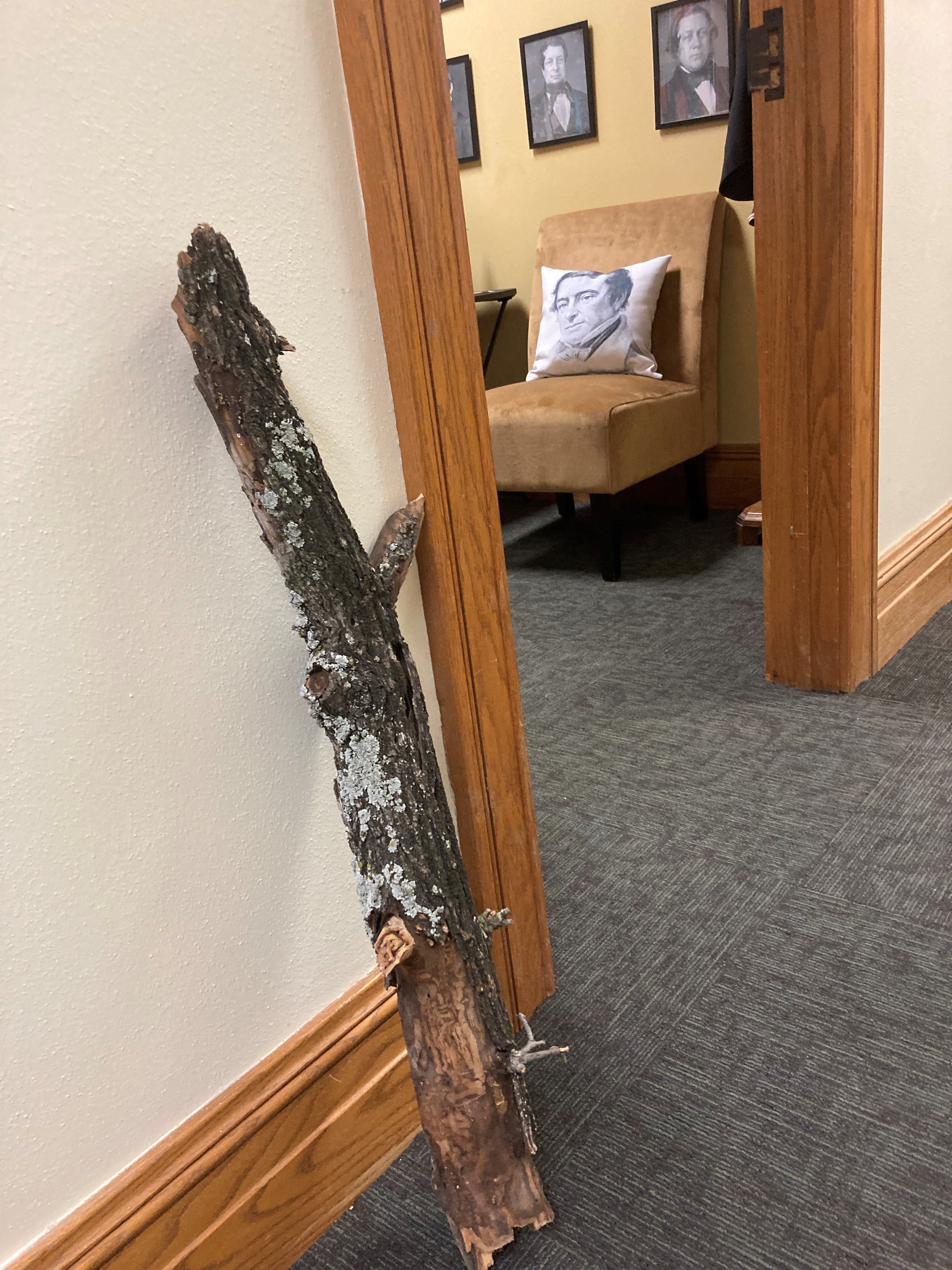
This log has camped out near my office for the past week. (And yes, that’s Washington Irving decor in my office.) Photo by Tracy Hoffman

Wednesday, November 12, 2025

BY TRACY HOFFMAN

My Washington Irving class completed our reading of A Tour on the Prairies today. If some of you were working through the text along with us, congratulations! We made it to Chapter 35.

I would like to thank Cheryl Weaver for crafting two wonderful blogs during the Halloween season while teaching “The Legend of Sleepy Hollow.” She gave me a few weeks to catch up, and it was better to hear about “Sleepy Hollow” during October than Irving’s buffalo hunt. Thank you, Cheryl. You’re awesome!

In the next few weeks, I’ll try to touch on themes my class discussed on our adventure through Oklahoma Territory with Washington Irving, but for today, I want to focus on one overall idea we used in the classroom–chautauqua.

The class concluded our study with a Zoom chat featuring Dr. John Dennis Anderson, who performs as Washington Irving. Another special thanks goes out to John for spending time with us today. Thank you! Thank you! John told the class how fortunate they were to have Dr. Hoffman as their instructor, and I reminded them of how lucky they were to have John Anderson join them for a conversation.

Awhile back, after having my class watch John’s performance on YouTube, I decided to experiment with chautauqua in the classroom. As I told John later, he makes it look easy, but it’s not that easy. Despite the challenges, the experience was still a fun classroom experiment. I would highly recommend teachers of literature apply such a technique to their teaching repertoire.

At the beginning of our journey through Irving’s book, I assigned each student one of the following characters or people groups. Their goal was to focus on these folks during the readings and be prepared to report on the assigned characters for upcoming reading quizzes:

  1. Washington Irving, the narrator
  2. Swiss Count (Albert-Alexandre de Pourtalés)
  3. Mr. L (Charles Latrobe)
  4. Commissioner/Rangers
  5. Tribes
  6. Settlers
  7. Antoine (not Tonish)
  8. Tonish (Antoine)
  9. Pierre Beatte

I’ve done this sort of thing before, most often when I teach Amy Tan’s Joy Luck Club. Following one of the four mothers or one of the four daughters works great for keeping up with the very detailed reading. Anyhow, beyond a close reading of characters, I added a chautauqua component.

Instead of giving students a quiz at the beginning of class to check their reading, I gave the quiz at the end of class, after we had chatted about the reading, from each character’s vantage point. It was uncomfortable at first, but I forced everybody to do their best to get into character, to have a conversation as if your characters were sharing “round the campfire,” like Irving and his companions spend their evenings on the prairies talking about the day’s events.

For a performance, John Anderson typically appears in character for the greater portion of his time and then steps out of character for the final part. However, my students and I were not able to stay in character for long. We found ourselves wanting to step aside and add commentary and ask questions, so we simply modified the process to flow in and out of character as needed.

For three classes, we followed a chautauqua-style conversation, which forced students to move their chairs, get out of the regular rows, and face me and each other. This shook a few of my “back row Baptist” students into a more significant role in the conversation. I really enjoyed hearing these students open up, and I hope they enjoyed playing a greater role in our chats.

For three classes in a row, I added to our makeshift “campfire.” At first, it was only an old Baylor popcorn can with construction-paper cut into flame-shaped shards of red, yellow, and brown.  I’ve heard tissue paper works better, but I didn’t have any of that on hand.

On Wednesday of last week, I exited my car, after arriving on campus, and immediately spotted a nice log—a branch which had obviously fallen during recent storms. I carefully lugged it to my office, where it sat in the hallway until class time. One of my colleagues passed by my office that day and said, “I like your log,” and kept walking.

One of my friends over the weekend said we needed smores, but I said no, since Irving had zero smores on the prairies. He did, however, have brown sugar with his black coffee. I scrounged up a canister of Folgers from the faculty lounge, but my personal coffee maker needed cleaning before sharing it with students. Next time I teach the book, I’ll be sure to reenact all the coffee drinking, which I appreciate.

My students told me we needed rocks to properly set up a campfire, so I “borrowed” a bag full of rocks from a lovely flower bed. (Hopefully, my HOA didn’t notice my digging in the flower beds on the security camera.) My students weren’t fans of the rocks I gathered, since they weren’t big enough to enclose a real campfire. Again, I have goals for the next time I teach the book.

It’s getting late, and I still need to return the rocks to their proper home, so I’ll stop for now. I’ll catch you next week for more debriefing about Irving’s Tour on the Prairies. Until then, you can check out one of John’s performances: https://www.youtube.com/watch?v=XXCoEwa2dqk


Ichabod Crane Heads Off to University: “The Legend of Sleepy Hollow” in the College Classroom

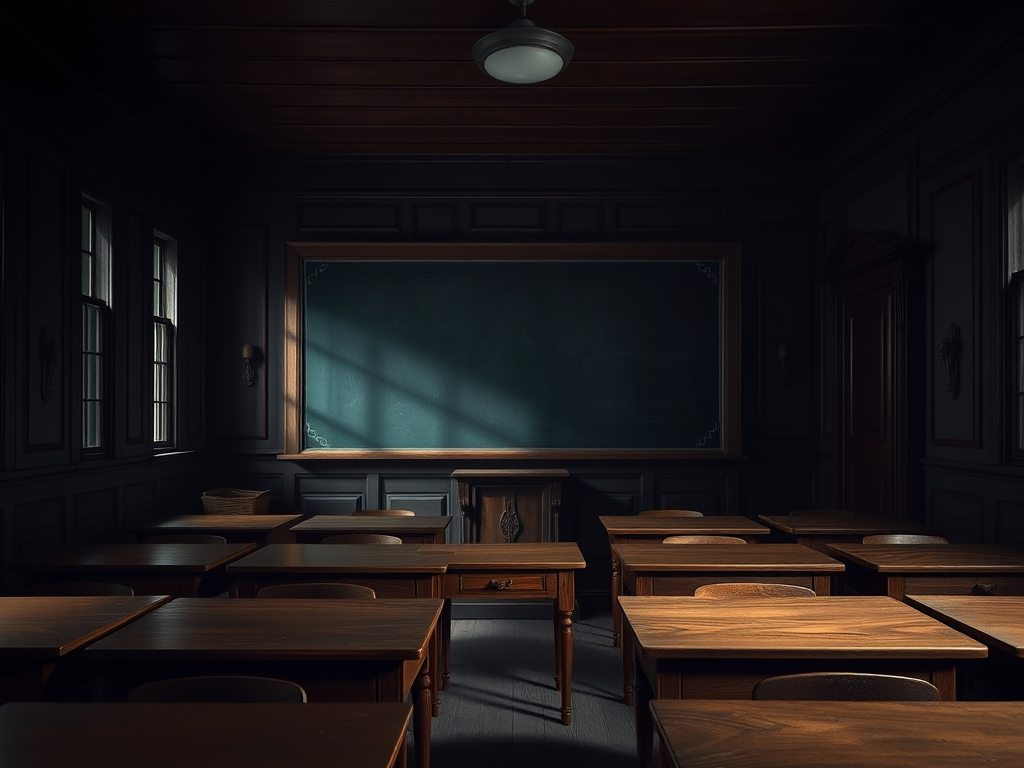
AI image, generated in WordPress

Wednesday, October 8, 2025

BY TRACY HOFFMAN

Last week, I blogged about ChatGPT’s advice for 31 ways of teaching “The Legend of Sleepy Hollow” in the K-12 classroom, so this week, I’m adding the university setting to the conversation.

The categories changed somewhat, after I tweaked the prompt to focus solely on the university classroom. ChatGPT now suggests the following breakdown for teaching “The Legend of Sleepy Hollow”:

• Literary Analysis Approaches
• Historical and Cultural Context
• Interdisciplinary Methods
• Comparative and Media Approaches
• Classroom Activities and Projects

And here’s a reminder of the K-12 categories:

• Reading Comprehension and Analysis
• Creative Activities
• Literary and Historical Connections
• Critical Thinking and Writing

Historical connections are listed for all learners, but cultural context was added for the university classroom. Cultural context for the story could include Dutch history, the Connecticut Yankee on stage, post-Revolutionary America, and more. Discussing Royal Tyler’s Jonathan in The Contrast (1787) probably wouldn’t work well in an elementary classroom, yet I can still imagine showing images of Connecticut Yankees to students of all ages.

Cultural context could still be relevant for younger students. But I get it. Reading Comprehension, a category set aside only for younger learners, would be more important than guiding students through the early American stage.

Lessons suggested for the university classroom, which I find particularly interesting, include:

LITERARY ANALYSIS APPROACHES

• Narrative Voice and Unreliable Narration: Discuss the frame narrative and how Diedrich Knickerbocker’s voice affects interpretation.

• Symbolism and Allegory: Explore the Headless Horseman as a symbol of the past, American identity, or suppressed fears.

• Genre Study/Gothic and American Romanticism: Place the tale in the context of early American Gothic literature and Romanticism.

• Satire and Humor: Examine Irving’s use of irony, exaggeration, and social satire—especially about education and religion.

HISTORICAL AND CULTURAL CONTEXT

• Puritanism and Superstition: Explore lingering religious influences and community beliefs in the supernatural.

• The American Frontier and Wilderness: Use landscape to discuss nature as a source of fear, imagination, and identity.

INTERDISCIPLINARY METHODS

• Ecocriticism: Analyze the role of nature, landscape, and environment in shaping emotion and meaning.

COMPARATIVE AND MEDIA APPROACHES

• Cross-Cultural Ghost Stories: Compare with ghost tales from other cultures or time periods (e.g., Japanese yūrei stories).

• Myth-Making in American Culture: Discuss the legend as part of America’s myth-making and creation of national folklore.

CLASSROOM ACTIVITIES AND PROJECTS

• Creative Writing/Alternate Ending: Ask students to write a different conclusion or a modern retelling of the tale.

• Map the Geography of Sleepy Hollow: Use historical maps and imagination to create visual layouts of the story’s setting.

• Multimedia Project/Audio Drama: Students produce a podcast version with sound effects, voice acting, and narration.

• Field Trip or Virtual Tour: Visit Sleepy Hollow, NY (virtually or in person), exploring Irving’s historical context and the landscape.

A field trip to Sleepy Hollow sounds like the very best idea, especially if I could take my entire class from Texas. Any wealthy donors want to make an end-of-year contribution to a most deserving 501-C3? One day, perhaps, I can take a crew to New York for the fall, the best time to go. In the meanwhile, a virtual tour of Sleepy Hollow sounds like a worthwhile endeavor.

The Multimedia Project/Audio Drama reminds me of what I already do with my classes. Students work in groups to put together podcasts, but I don’t make them perform the text. They simply chat about Irving or whatever we’re studying. However, I could see myself adjusting this assignment for future semesters. Professors are often concerned about whether students have done the reading. If they perform the text, then there’s no doubting whether they’ve read it.

For the Creative Writing/Alternative Ending suggestion, I already gave a nod to rewriting the end of “Sleepy Hollow” for K-12, but it’s repeated here for college students. I shall definitely give this a whirl in the spring. We’ve already read “The Legend of Sleepy Hollow” in all of my classes for this semester.

Cross-Cultural Ghost Stories could be worthwhile, and the suggestion of including Japanese stories fascinates me. I’m always looking for ways to merge Washington Irving with Asian-American Literature, which I’ve started teaching recently, and ghost stories would be another way of doing so.

The American Frontier, Ecocriticism, and Mapping Sleepy Hollow stand out to me since, earlier this afternoon, my Washington Irving class read and discussed “The Adventure of the German Student,” which appears in Tales of a Traveller (1824). From the very beginning of the story, Irving paints the Paris scene, as he sets up Tarry Town in “The Legend of Sleepy Hollow.” Instead of “the bosom of one of those spacious coves which indent the eastern shore of the Hudson,” we get “a stormy night, in the tempestuous times of the French Revolution” along with “loud claps of thunder,” reminiscent of “Rip Van Winkle.”

By the way, this is what I’ve been listening to while writing this blog, in case you were wondering:

I took the advice of my blog from last week, to consider music/playlists as I’m teaching Irving’s texts. For some reason, guitar music always reminds me of Washington Irving, perhaps because of his stay at the Alhambra and my listening to many a Spanish guitar while visiting Granada and southern Spain.

With dogs barking outside my office window, the cleaning staff vacuuming outside my door, and with my office still sitting at 80 degrees, I needed noise-canceling headphones, strong Starbucks coffee, and instrumental guitar music to help me say something in a blog before 11:59 p.m. on this Washington Irving Wednesday. Hopefully, a thing or two I’ve shared will be useful to you.

My students have compiled playlists of their own, in response to one of my midterm exam questions, and I’ll share their suggestions for next week’s blog. The music selections, which remind them of Washington Irving, made me smile, and I think you’ll enjoy their suggestions, too. Until next week.

Ichabod Crane Still Haunts My Brain: Pedagogical Thoughts about Sleepy Hollow’s Connecticut Yankee

AI Generated in WordPress

Wednesday, September 10, 2025

BY TRACY HOFFMAN

Over the weekend and into this week, I’ve continued thinking about Ichabod Crane as a teacher and ghost.

These ruminations have blended with concerns about A Christmas Carol by Charles Dickens since the beautiful building, which comprises my 85-degree office, will soon be turned into a haunted-house-of-sorts for Scrooge’s ghosts. I will most certainly get around to writing about the impending mayhem in future blogs. Suffice it to say for today, my Ichabod thoughts have been tainted by a foreboding sense of Charles Dickens.

My mental image of Ichabod Crane coexists with pictures of the Dickens’ character Uriah Heep from David Copperfield. Physically, they look the same in my mind’s eye, even though I realize Ichabod is a much livelier character than Uriah. But let me stop myself from going further into the Dickens rabbit hole. (If you want to jump into Elizabeth Bradley’s article, “Dickens and Irving: A Tale of Two Christmas Tales,” you’ll be ready for my future conversations as we get closer to December.)

The big research questions I pose today are:

  1. Is Ichabod Crane the first Connecticut Yankee Pedagogue Ghost in American Literature?
  2. Is Ichabod Crane the first Connecticut Yankee Ghost in American Literature?
  3. Is Ichabod Crane the first Connecticut Yankee Teacher in American Literature?

I think we know the answers to all these questions. American Literature isn’t necessary. Where else would we see a Connecticut Yankee? Yes, of course, he would be the first in all three categories. The first two questions/descriptions are so bizarre and specific, I can’t imagine another character fulfilling them. But my last question has me thinking.

Yes, I believe Ichabod Crane is our first Connecticut Yankee who teaches. But why, in the development of the Connecticut Yankee, did Irving choose to make him a teacher?  

Ichabod Crane balances between the Jonathan character of Royal Tyler’s The Contrast (1787) and Hank Morgan of Mark Twain’s Connecticut Yankee in King Arthur’s Court (1889). David Gamut of James Fenimore Cooper’s Last of the Mohicans (1826), appearing a short time after Irving’s character, keeps the role as a music teacher, but Hank Morgan has lost the teaching quality by 1889.

According to Gary Denis, in Sleepy Hollow: Birth of the Legend (2015), Irving transfers some of the stereotypical qualities of the Yankee onto Brom Bones and refines Ichabod’s role to make him an “educated city-slicker” instead of “the country dweller” (158). Denis points to Irving’s improvement: “Irving is thereby credited as having been the first to introduce a conflict between East and West, the refined and cultured Connecticut Yankee vs. the rough-hewn frontiersman” (158).

But I’m still left with—Why? Why did Irving choose a teacher for Ichabod’s profession? We know that the minister and Ichabod Crane are the two most educated fellows in Sleepy Hollow, so I understand the options were limited.

We can study Jesse Merwin, Irving’s teacher friend who inspired the character. And we can consider Ichabod B. Crane, the military officer and inspiration for Ichabod’s name. With more research to investigate, I’ll close the blog out for now. My quest to understand Ichabod Crane, the pedagogue, continues.

Today, my students are reading “The Devil and Tom Walker,” and I can see Dickens borrowing heavily from Irving’s story to benefit his own Christmas Carol, so my blog next Wednesday could easily collapse into my own Dickens’ nightmares.